
Alcantara Gorges vs Lakes (Gurne): The Perfect Itinerary for Body Rafting & Cliff Jumping
The Alcantara River in eastern Sicily is one of the most unusual natural environments in Europe — a 52-kilometre river that originates on the Nebrodi slopes and carves through ancient lava formations on its way to the Ionian Sea. Along that route, there are two places worth your time: the Alcantara Gorges and the Alcantara Lakes, known locally as the Gurne. They are 3.5 kilometres apart. They look nothing like each other. And they offer completely different experiences. Here is the honest guide to both — and the itinerary that combines them in one day.
Watch our local guide walk you through the difference between the Alcantara Gorges and the Lakes — and how to plan the perfect day.
The Alcantara Gorges are a geological wonder formed by ancient lava flows — narrow basalt canyon walls up to 25 metres high, accessible via public stairs for €2. The Alcantara Lakes (Gurne) are natural pools 3.5 km upstream, with abundant water, waterfalls, and cliff jumps of up to 6 metres depending on water level. Body rafting takes place at the Gurne — not the Gorges, where water levels are too shallow. Both can be visited in one day: body rafting at the Gurne and a geological visit to the Gorges, 5 minutes apart by car.
RECAP
Gurne (Lakes): body rafting, cliff jumps up to 6m, waterfalls, wild, away from crowds
Alcantara Gorges: basalt canyon, geological wonder, €2 public stairs, family-friendly
Distance: 3.5 km — 5 minutes by car
Alcantara Valley: 52 km, from Randazzo (900m) to Giardini Naxos
Both in one day: entirely possible
Alcantara Lakes (Gurne): Where Body Rafting and Cliff Jumping Really Happen
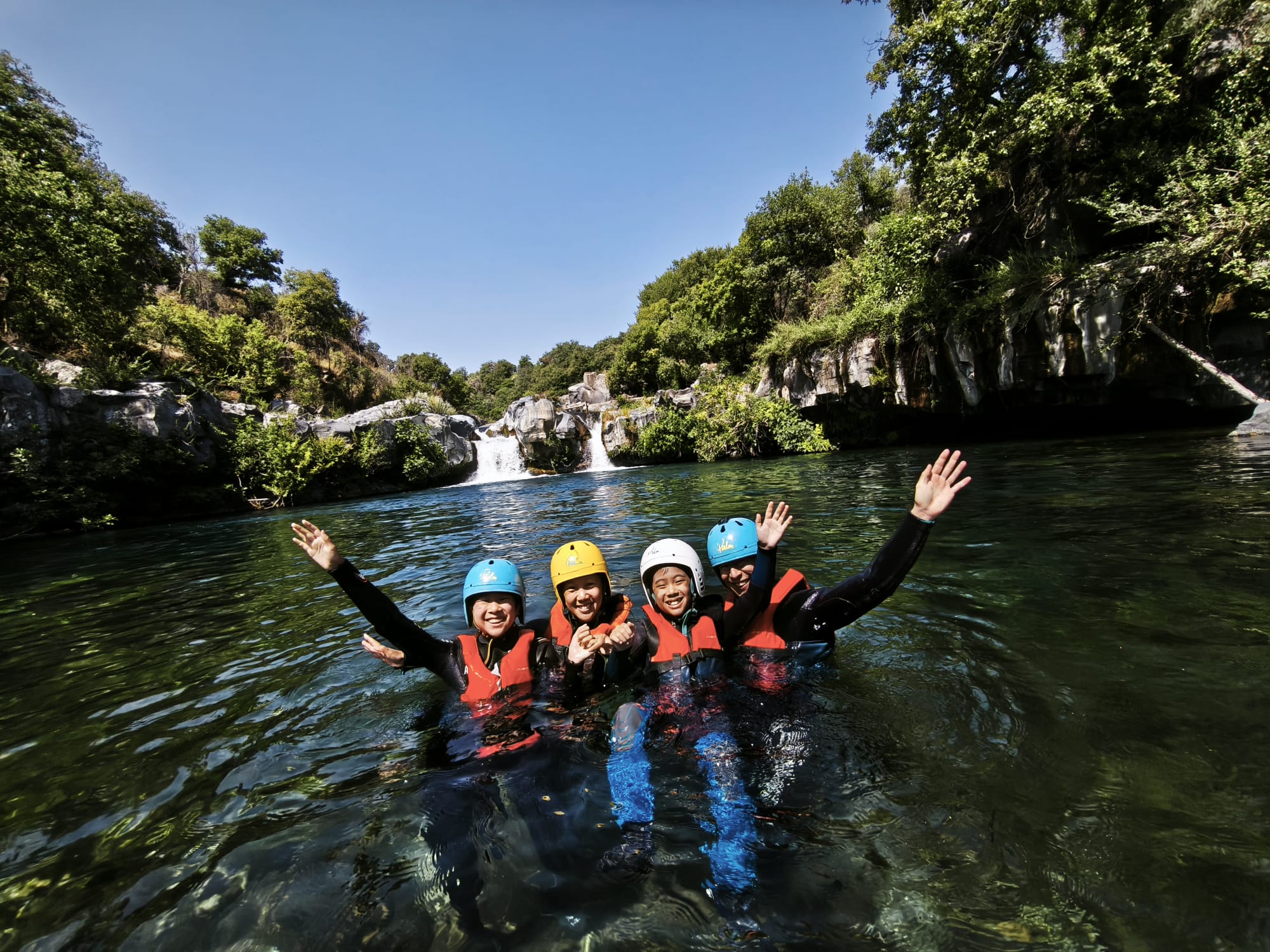
The Alcantara Lakes — known by locals as the Gurne — are where body rafting actually works. Deep natural pools formed by volcanic rock and fed by cold mountain water from Etna's slopes. Waterfalls dropping into the pools. Cliff jumps of up to 6 metres, depending on water level. And none of the crowds that pack the main gorge entrance in summer.
This is the wild part of the Alcantara River. No coach parks, no ticket queue, no organised facilities. Just basalt, cold water, and a landscape that most visitors to Sicily never find because they stop at the gorges.
Body rafting here means moving through the pools with a wetsuit, helmet, and life jacket — navigating current, dropping into water from natural rock ledges, and covering a stretch of river that has been shaped by centuries of volcanic activity. The jumps are optional — up to 6 metres for those who want them, with a pedestrian path alongside for those who prefer to skip and rejoin the group below within minutes.
The water temperature stays at 10–12°C year-round. In July and August, when air temperatures outside reach 35–40°C, that gap is significant — and the cold water is exactly the point.
Alcantara Gorges, Valley and River: Understanding the Difference
The Alcantara is not one place — it is a valley, a river, and two distinct sites that visitors often confuse because they share the same name.
The Alcantara Valley stretches
52 kilometres from the town of Randazzo at 900 metres above sea level all the way down to Giardini Naxos on the Ionian coast. The valley is rural Sicily at its most authentic — lemon groves, small medieval villages, vineyard terraces, and the river running through basalt formations the entire length.
The Alcantara River
is the water source itself — cold, fast, and fed by rainfall and snowmelt filtered through Etna's volcanic rock. It does not warm up in summer. The 10–12°C temperature is a geological constant, not a seasonal variable.
The two spots worth visiting are the Alcantara Gorges and the Alcantara Lakes. They are 3.5 kilometres apart. Everything else in the valley is context — beautiful context, worth exploring if you have time — but the Gorges and the Lakes are where the experiences are.
Why the Lakes, Not the Gorges, Are the Right Place for Body Rafting
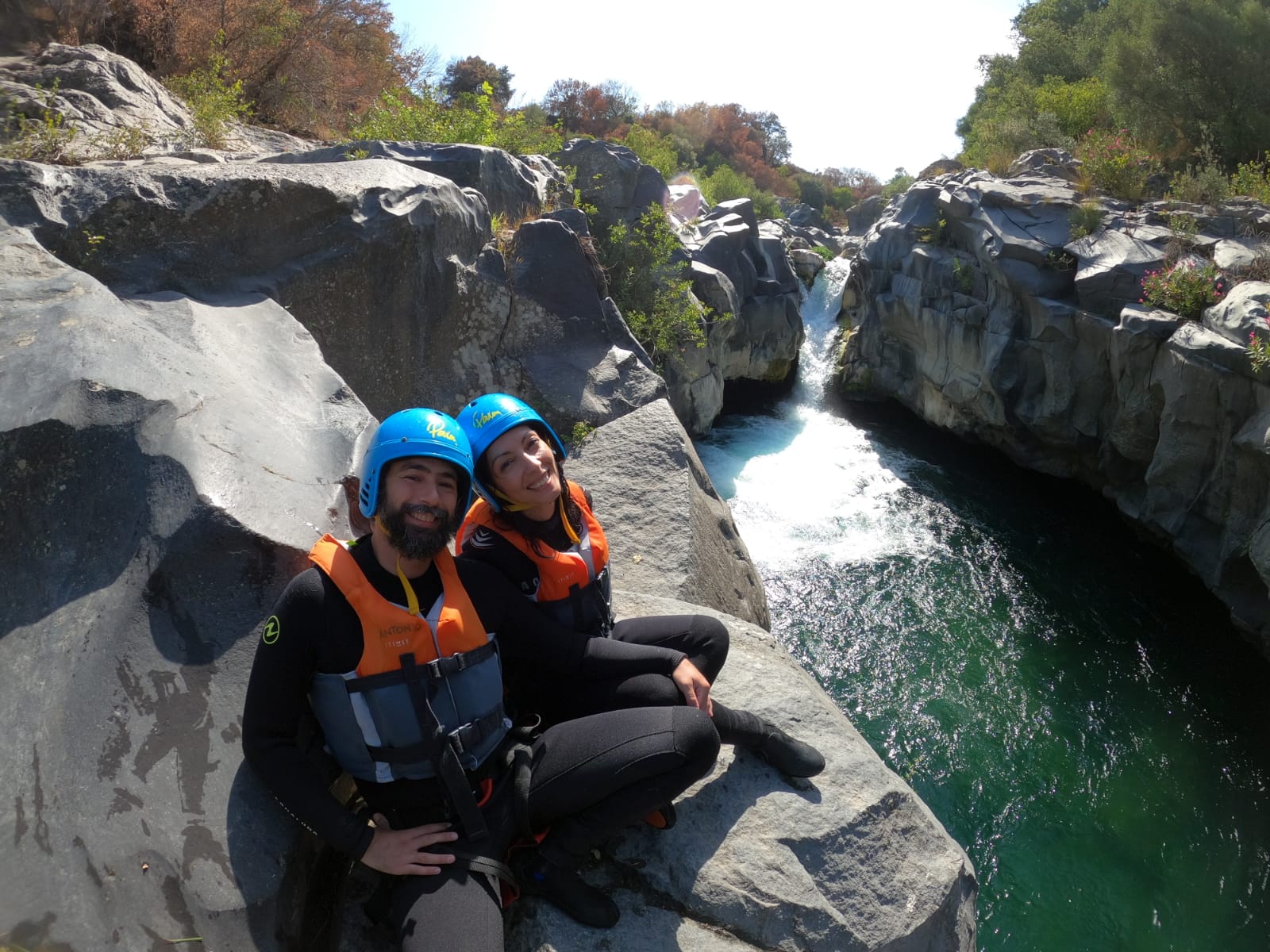
This is the question most visitors get wrong — and it is worth answering directly.
The Alcantara Gorges are one of the most photographed natural sites in Sicily. They are genuinely spectacular. They are also crowded in summer, and the water level inside the canyon is low — ankle to knee depth in most sections. Body rafting requires deep water and sufficient flow. The gorge provides neither. People go in wearing wetsuits at the main gorge entrance and the water activity ends within 20–30 minutes. That is not what body rafting is.
The Alcantara Lakes have the water. Deep pools, active current, enough flow to navigate through the canyon sections and enough depth for jumping. The difference is structural — it comes from the geography of the river at each point, not from the season or the weather.
Body rafting takes place at the Gurne. Not because the Gorges are not worth visiting — they are, and we will come to that — but because the Gurne are the only place on this stretch of river where the conditions for a real body rafting experience exist.
Alcantara Gorges
Water depth: Shallow — ankle to knee in most sections
Body rafting: Not possible — insufficient depth and flow
Cliff jumping: Not available
Natural waterslide: No
Crowds: High in peak season
Geology: Extraordinary — hexagonal basalt columns up to 25 metres
Entry cost: €2 public stairs / €30 private lift
Alcantara Lakes (Gurne)
Water depth: Deep — full immersion pools
Body rafting: Full activity — the only location on this stretch where it works
Cliff jumping: Up to 6 metres depending on water level
Natural waterslide: Natural volcanic toboggan
Crowds: Low — away from the main tourist circuit
Geology: Excellent — volcanic basalt pools and formations
Entry cost: Included in the body rafting tour
The Alcantara Gorges: Geology, Lava Rock and How to Visit
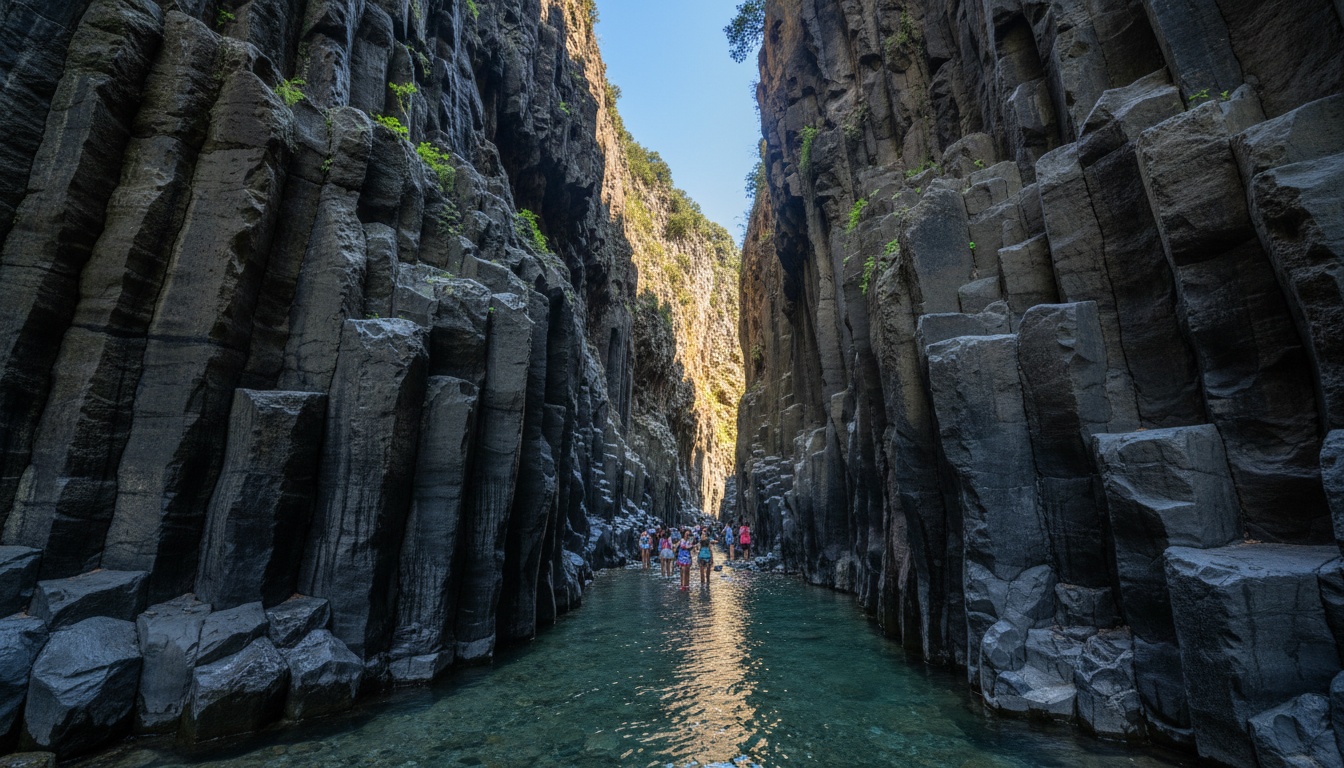
The Alcantara Gorges deserve their reputation. The canyon was formed when ancient lava flows from Mount Etna cooled rapidly on contact with river water — the sudden temperature change caused the lava to fracture into the distinctive hexagonal basalt columns that rise up to 25 metres on both sides of the gorge. The geometry looks engineered. It is entirely natural.
Walking inside the gorge is an experience worth having. The scale of the walls, the clarity of the water at the base, and the visible layers of volcanic history in every surface make this one of the most extraordinary geological sites in the Mediterranean.
How to visit: The most direct access is via the public stairs — €2 per person. The stairs take you down to the canyon floor where you can walk in the water, feel the cold, and take in the geology from ground level. A private lift operated by the park authority costs €30 and includes access to internal facilities.
The gorge is best visited before 10:00 in summer. Between those hours, the main entrance sees its highest visitor volume and the canyon floor becomes significantly more crowded. Early morning gives you the gorge at its quietest and the light at its most dramatic.
The visit takes 1–2 hours. The gorge closes at 19:00.
How to Plan the Perfect Alcantara Day: The Local Itinerary
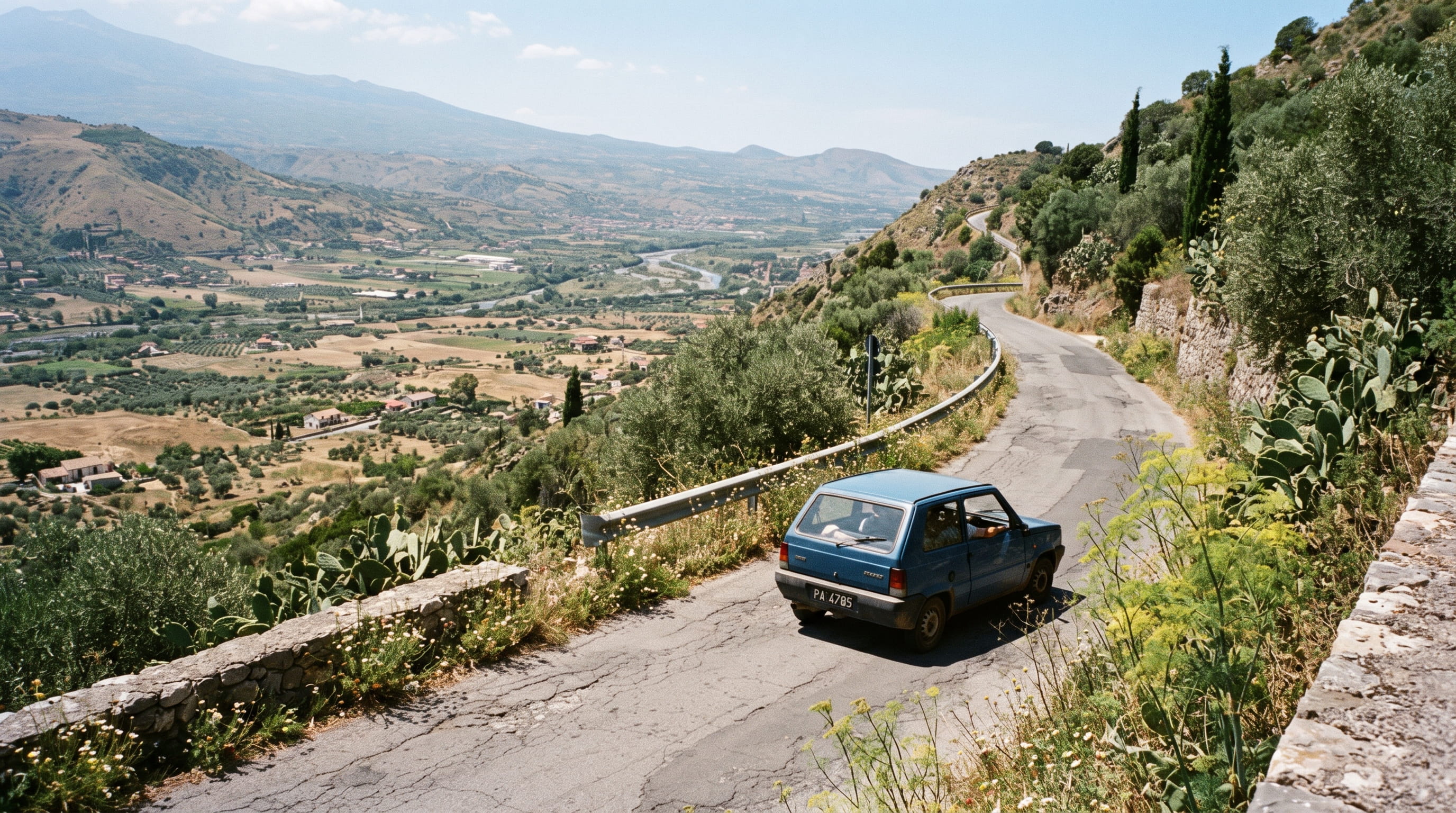
The Gurne and the Gorges are 3.5 kilometres apart — 5 minutes by car along the Alcantara valley road. Visiting both in one day is not only possible, it is the right way to understand what this river actually offers.
The sequence depends on when you book the body rafting session.
Option A
Body rafting in the morning, Gorges in the afternoon
Book the 10:00 or 11:00 body rafting session at the Gurne. The activity runs for approximately 2 hours. By early afternoon you are done, dry, and 5 minutes from the Gorges entrance. Take the public stairs (€2), walk the canyon floor, and spend 1–2 hours with the geology. The Gorges close at 19:00 — there is no rush.
Option B
Gorges in the morning, body rafting in the afternoon
Arrive at the Gorges before 11:00 — the canyon is quieter before the summer crowds peak. Take the public stairs (€2), spend the morning exploring. By midday, drive 5 minutes to the Gurne and join the 14:00 or 15:00 body rafting session. The afternoon pools are equally good — water conditions at the Gurne do not change with the time of day.
Both sequences work. The morning gorge visit has a slight edge in summer — quieter, cooler, better light. The morning body rafting works well if you prefer the active part first and want to end the day at a leisurely pace in the gorge.
The Alcantara Valley
if you have more time: the valley stretches from Randazzo at 900 metres down to Giardini Naxos. If you have more than one day, the road through the valley passes through small towns, vineyards, and viewpoints that most Sicily visitors never reach. Castiglione di Sicilia, the wine district around the Alcantara river, and the rural landscape between the gorges and the volcano are worth the detour.
For one day, the Gurne and the Gorges are enough. Two experiences, one river, 5 minutes apart. That is the perfect Alcantara day.
CONCLUSION
The Alcantara River gives you two completely different experiences within 3.5 kilometres. The Gorges are a geological wonder formed by volcanic rock and cold water — narrow, dramatic, and worth every visitor's time. The Lakes are where the body rafting happens — deep pools, waterfalls, natural waterslides, and cliff jumps of up to 6 metres in a landscape away from the main tourist flow. Visit both. The itinerary is straightforward, the distance is nothing, and the two sites together give you a complete picture of what this extraordinary river actually is.
FAQ
What is the difference between the Alcantara Gorges and the Alcantara Lakes?
The Gorges are a narrow basalt canyon formed by ancient lava flows — a geological wonder best visited for its visual impact and natural history. The Lakes (Gurne) are natural pools upstream where body rafting and cliff jumping take place. Same river, completely different experiences, 3.5 kilometres apart.
Can I do body rafting inside the Alcantara Gorges?
No. The water level inside the gorge is too shallow for body rafting — ankle to knee depth in most sections. Body rafting takes place at the Alcantara Lakes (Gurne), where the pools are deep enough for full immersion, cliff jumping, and navigating current.
How high are the cliff jumps at the Gurne?
Jumps reach up to 6 metres depending on the water level. They are optional — a pedestrian path runs alongside and rejoins the group below within minutes. No one is required to jump.
How much does it cost to enter the Alcantara Gorges?
The public stairs cost €2 per person and give direct access to the canyon floor. The private lift costs €30 and includes access to internal park facilities. For a geological visit, the public stairs are sufficient.
Can I visit both the Gorges and the Lakes in one day?
Yes. The two sites are 3.5 kilometres apart — 5 minutes by car. Book body rafting at the Gurne in the morning and visit the Gorges in the afternoon, or reverse the sequence. Both work comfortably within a single day.
Is the water cold at the Alcantara Lakes?
Yes. The Alcantara River stays at 10–12°C year-round regardless of air temperature. In July and August, when outside temperatures reach 35–40°C, the cold water is one of the main reasons to visit. A wetsuit is provided for all body rafting participants.